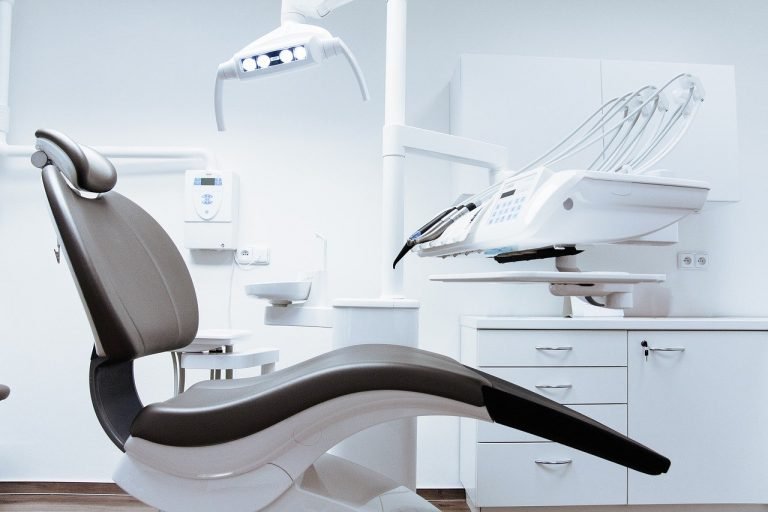
Dental Air Compressor Chair Count Guide: Sizing Your Compressor for Clinic Size
[Last updated: 2026-04-09]
# Dental Air Compressor Chair Count Guide: Sizing Your Compressor for Clinic Size
Choosing the wrong size dental air compressor leads to pressure drops, excessive noise, and premature wear. The key factor is **chair count**—the number of treatment chairs your compressor can reliably supply. This guide breaks down how to match airflow (L/min), tank capacity, and duty cycle to your clinic's size.
> **Quick answer:** Allocate approximately **60–80 liters per minute (L/min)** of free air delivery per dental chair at 100 psi. For a 4‑chair clinic, target at least **250–300 L/min**. Also consider tank size (80–100 L) and duty cycle (continuous 100%). Undersizing causes pressure fluctuations; oversizing provides headroom with minimal downside.
## Who this article is for
- Clinic buyers equipping a new or expanding dental practice
- Distributors and importers advising customers on compressor sizing
- Technicians and facility planners responsible for compressed air systems
## Why chair count matters more than raw specs
Many buyers focus solely on pressure (psi/bar) or tank volume, but the real constraint is **airflow demand**. Each dental chair equipped with a high‑speed handpiece consumes a certain volume of air per minute. When multiple chairs operate simultaneously, the demands add up.
If the compressor cannot maintain pressure, you'll notice:
- Pressure dropping below operating thresholds during treatments
- Increased motor cycling, reducing lifespan
- Inconsistent performance of air‑powered tools
Understanding the relationship between chairs and required airflow prevents costly mistakes.
## Decision checklist
Confirm these points before purchasing:
- **Airflow (Free Air Delivery, FAD)**: Measured in L/min. Aim for 60–80 L/min per chair.
- **Pressure rating**: Most dental tools operate at 80–100 psi (5.5–7 bar). Ensure the compressor sustains this at full load.
- **Tank size**: Larger tanks buffer peak demand. For multi‑chair clinics, 80–100 L helps.
- **Duty cycle**: Continuous duty (100%) is essential for all‑day clinic operation.
- **Noise level**: dB rating matters for indoor installation; 70 dB(A) or lower is preferable.
- **Voltage & frequency**: Match your local supply (220V/50Hz common outside the US).
- **Oil‑free vs oil‑lubricated**: Oil‑free reduces air contamination risks.
- **Maintenance access**: Ease of filter changes and draining.
## Recommended sizing by chair count
Use this table as a starting point:
| Number of chairs | Minimum airflow (L/min) | Recommended tank size | Duty cycle | Typical noise dB(A) |
|------------------|------------------------|----------------------|-------------|-------------------|
| 1–2 | 80–120 | 30–50 L | 100% | 65–72 |
| 3–4 | 200–300 | 80–100 L | 100% | 65–72 |
| 5+ | 300–500+ | 100–200 L | 100% | 67–75 |
*Notes:* Values assume simultaneous use of high‑speed handpieces. Oversizing provides headroom; balance with space and budget.
## Practical examples
**Small 2‑chair clinic**
A compact oil‑free compressor with 120 L/min, 50 L tank, and 70 dB rating is usually sufficient.
**Medium 4‑chair clinic**
Choose a unit with at least 250 L/min, 100 L tank, 68–70 dB. Ensure voltage compatibility (often 220V 50Hz) and consider built‑in dryer/filters.
**Large 6+ chair clinic**
Multiple compressors or a high‑capacity unit (>400 L/min) with a large receiver tank is recommended. Consider redundancy for reliability.
## Frequently asked questions
### How many chairs can a 1 HP compressor support?
Horsepower alone is not reliable; efficiency varies. Focus on **L/min** instead. A 1 HP oil‑free compressor typically delivers 80–120 L/min, suitable for up to 2 chairs if used carefully.
### Is a larger tank always better?
A larger tank reduces motor start cycles and handles short‑term peaks better. However, an oversized tank may increase footprint and cost. Balance tank size with available space and actual demand.
### What happens if the compressor is too small?
Undersized units cause pressure drops during peak usage, increase wear due to frequent starts, and may not supply enough air for all tools, affecting treatment quality and equipment lifespan.
### Should I buy extra capacity for future expansion?
If you plan to add chairs within 2–3 years, slight oversizing now can avoid a second purchase. Keep in mind larger units are noisier and consume more power even if lightly loaded.
### Do I need an air dryer?
Yes, an air dryer is strongly recommended. Moisture in the air line can damage dental equipment and affect procedures, especially in humid climates.
## Conclusion
Choosing the right dental air compressor hinges on matching **airflow to chair count**, supported by adequate tank size and continuous duty operation. Avoid guesswork: calculate your peak demand and select a unit with enough headroom.
**Next step:** Share your clinic's chair count, voltage, and noise constraints. We'll propose 2–3 configurations tailored to your market—OEM packing, lead time, and MOQ options included.
---
For a comprehensive overview of all selection factors, see our guide on [How to Choose the Right Dental Air Compressor for Your Clinic](https://shenronltd.com/how-to-choose-the-right-dental-air-compressor-for-your-clinic-en-8/). For supply‑chain considerations, read [How to Choose a Reliable Air Compressor Manufacturer in China](https://shenronltd.com/how-to-choose-a-reliable-air-compressor-manufacturer-in-china-en-5/). Explore our full range in the [Dental Air Compressors category](https://shenronltd.com/category/dental-air-compressors/).